
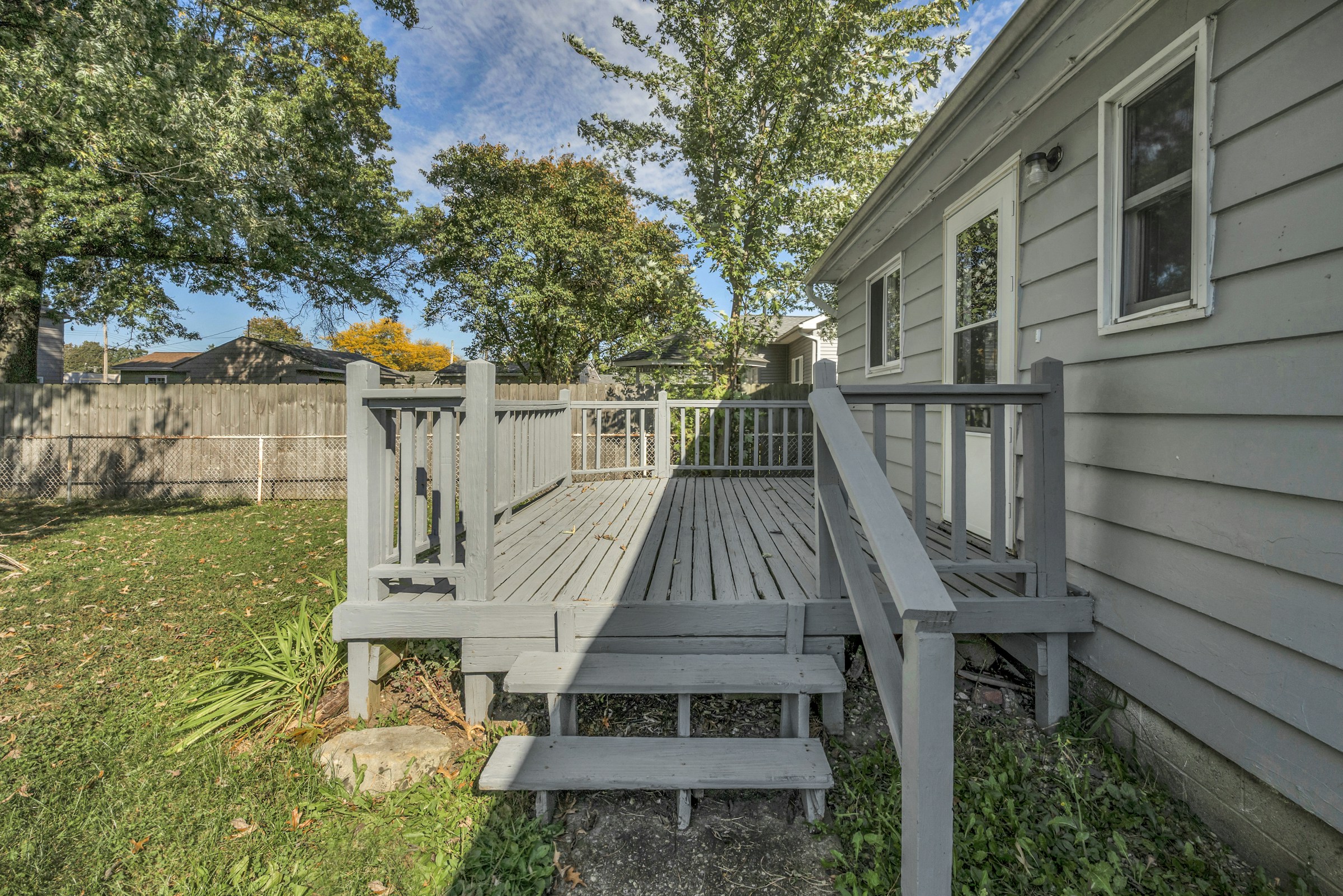
Every spring is a good time to walk your deck with a screwdriver in hand. Cape winters bring repeated freezing and thawing, and salt air corrodes fasteners faster than inland. A quick check now can catch small problems before they become big ones.
Start at the ledger, the board where the deck attaches to the house. This is where most deck failures begin. Look for rust streaks, soft wood, or water stains on the house siding below. If the ledger has no flashing over it, water has likely been getting behind it for years.
Next, push the screwdriver into the joists and posts, especially where they meet the ground or each other. If it sinks in easily, that wood is rotting. Check that the posts are sitting on footings, not directly on soil.
Then look at the surface. Loose railings, popped nails, and a few split boards are usually repairable. Widespread soft boards, wobbly railings, or rot in the framing usually mean it's time to rebuild.
When we rebuild, we flash the ledger, use hot-dipped galvanized or stainless hardware rated for coastal air, and set the frame on proper footings. Composite decking is a good option for homeowners who don't want to stain every few years.